



Early in my banking career, I saw the same breach roots again and again: not because criminals got smarter, but because organisations weren’t aligned on ownership of risk. Today, that age-old truth has amplified ten-fold.
From phishing to AI deepfakes, modern fraud has diversified — and so must our understanding of it.
These aren’t theoretical headlines. These are validated fraud categories backed by industry research including FFIEC risk assessments, the Verizon Data Breach Investigations Report (DBIR), LexisNexis Risk Solutions fraud data, and global enforcement trends.
Let’s examine the 11 most prevalent fraud risks and why they succeed — especially when responsibility is unclear between IT, fraud teams, operations, and governance functions.
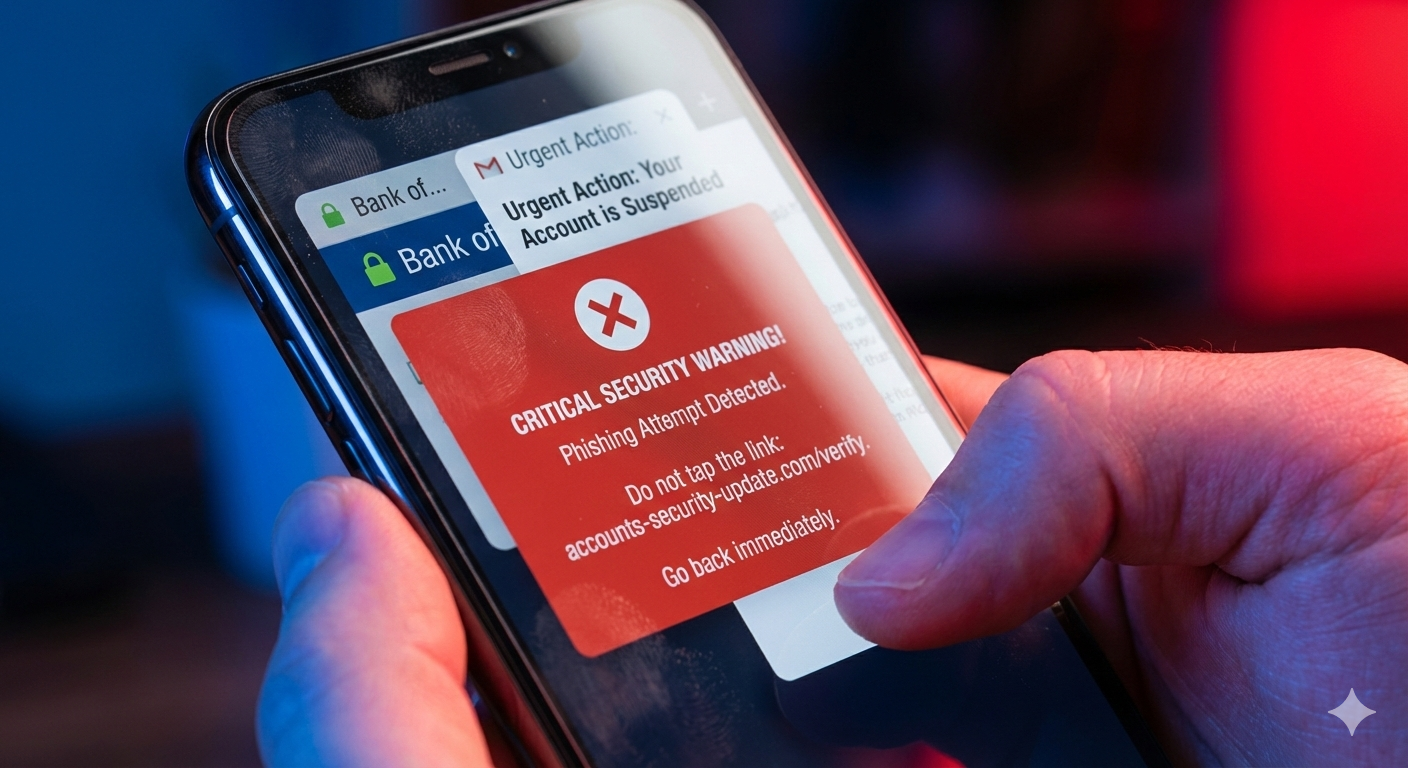
1. Phishing — Still the Most Common First Step
Phishing remains the top vector for account compromise. According to the 2025 Verizon DBIR, phishing was involved in over 36% of security breaches documented across sectors. Social engineering still trumps advanced tech because it exploits human trust.
Victim belief + malicious link = access.
Institutional Remedy: Multifactor authentication, real-time link analysis, staff training under pressure testing.
2. Social Engineering — Not Just a Buzzword
Beyond generic phishing, social engineering includes voice impersonation, scripted interactions, and high-pressure urgencies that bypass controls.
LexisNexis 2025 fraud data shows social engineering was present in 85% of large-loss fraud cases, particularly those involving internal overrides or executive impersonation.
Institutional Remedy: Scenario-based training, psychological readiness programs, escalation protocols.
3. Business Email Compromise (BEC)
BEC is validated as one of the lowest cost, highest loss attacks. The FBI’s Internet Crime Complaint Center (IC3) consistently places BEC at the top of reported losses — sometimes exceeding $2.7B annually in the U.S.
Modern BEC uses lookalike domains + AIised language generation to imitate executives and vendors.
Institutional Remedy: X509 email validation, dual authorization, payment threshold rules.

4. Identity Theft – Not Just Fake IDs
Today’s identity fraud is fueled by aggregated breaches, synthetic identity creation, and credential stuffing.
Gartner reports show that AI-assisted identity creation tools now bypass traditional verification with success rates over 60% in test environments.
Institutional Remedy: Biometrics, risk-based authentication, out-of-band verification.

5. AI Deepfakes and Synthetic Identities
AI deepfakes are not future threats — they are active weapons in fraud.
Recent research shows that voice-cloned phone interactions are used to socially engineer victims, while synthetic faces fool facial recognition systems.
Institutional Remedy: Verified trusted channels, liveness checks, multi-modal verification.
6. Keylogger Malware
Keyloggers are often delivered through drive-by downloads or malicious attachments.
Once installed, they capture credentials and pass them to anonymous repositories.
Global malware reports confirm that keylogger families remain among the most persistent threats.
Institutional Remedy: Endpoint protection, application allow-listing, behavioral analysis.
7. Spyware and Behavioral Monitoring
Unlike keyloggers, spyware can watch patterns, sessions, and behavior — capturing MFA tokens in memory.
Banks must assume that compromised endpoints can masquerade as legitimate users when tokens are correct.
Institutional Remedy: Zero trust architecture, continual re-authentication.

8. Malware Through Supplier Ecosystems
A surprising number of breaches are second-order — delivered via trusted third-party suppliers.
Even if a bank’s own core systems are secure, a vendor system compromise can open a door.
Institutional Remedy: Supplier risk scoring, penetration testing, segmented access.
9. Ransomware — The Lateral Threat
Ransomware doesn’t just encrypt data — it co-opts operations.
Accenture’s 2025 Ransomware Insights report shows that ransomware actors increasingly exfiltrate data pre-encryption to weaponize dual extortion.
Institutional Remedy: Immutable backups, air-gapped recovery, rapid incident response drills.
10. APP Fraud / Authorized Push Payment (APP)
Authorized Push Payment fraud is unique because the victim authorizes the payment — often under duress or deception.
In APP scams, the bank may be liable for reimbursement under regulatory frameworks in many markets.
Institutional Remedy: Customer alerts, out-of-transaction authentication, real-time fraud scoring.
11. Data Breach — Extended Exposure
Losses often begin with a breach in a supplier or a partner.
Regulatory expectations like PCI DSS, GDPR, PDPA, and SOX demand not only prevention but rapid notification and forensic readiness.
Institutional Remedy: Continuous monitoring, access control, data minimisation.
Why These Fraud Risks Succeed
All of the above succeed when responsibility is fragmented.
IT thinks Fraud owns social engineering.
Fraud thinks IT owns email security.
Operations wonders who should stop the payment.
Meanwhile, the transaction goes through.
True cyber risk management isn’t just about technology —
it’s about ownership, accountability, and integrated controls.
Where Civil Recovery Fits In
Detection and prevention are only half the battle.
When fraud succeeds, recovery becomes civil and legal, not just investigative.
Victims need:
• Structured evidence preservation
• Legal pathways that consider breach vectors
• Funding for cross-jurisdiction claims
• Specialist counsel with domain knowledge
This is where ALTIX comes in — bridging victims, law firms, and funders for structured, funded recovery long after the incident.
If you’re a financial institution, adviser, or risk leader wrestling with these fraud vectors, don’t let ownership gaps be your weakest link.
Connect with ALTIX to transform valid fraud claims into fundable civil recovery pathways.
📩 info@altix.exchange
🌐 www.altix.exchange
Justice is not only about stopping fraud — it’s about getting recovery done right.