



A finance director approves what appears to be a routine supplier payment.
The email thread is familiar.
The tone is consistent.
The invoice matches prior transactions.
Within hours, millions are gone.
Not to a hacker breaking systems
but to a system that worked exactly as designed.
This is the new face of financial fraud.
And increasingly, it is becoming a financial dispute problem, not just a cybercrime story.
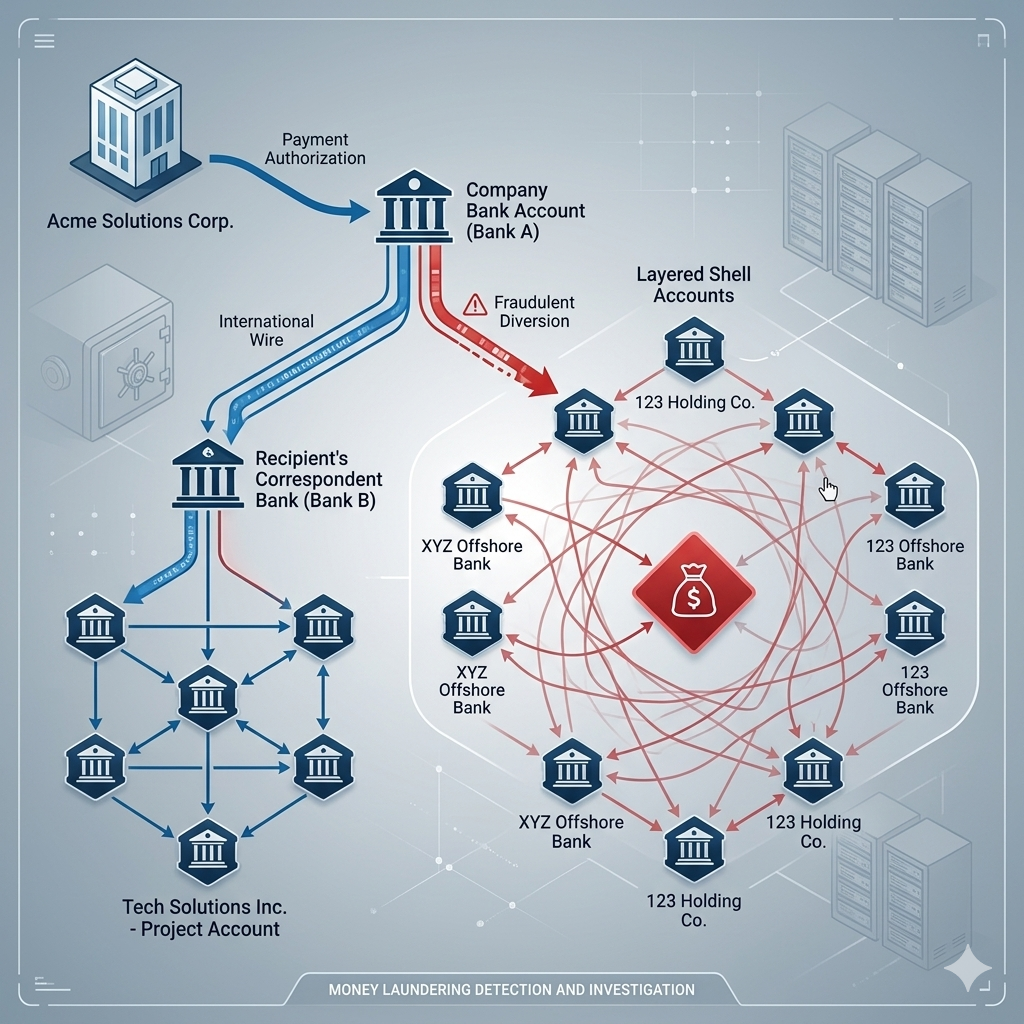
The Scam Behind the Headlines
In the past 30 days, regulators and banks across Europe and the US have flagged a surge in AI-enhanced Business Email Compromise (BEC) and invoice redirection scams.
The mechanics are deceptively simple:
• Attackers infiltrate or mimic email chains
• AI tools replicate tone, writing style, and timing
• Payment instructions are subtly altered
• Finance teams approve transactions under routine processes
There is no breach alert.
No malware warning.
No obvious failure.
Just a legitimate payment… to the wrong place.
Why This Is Now a Financial Dispute, Not Just Fraud
Historically, these cases were treated as straightforward fraud losses.
Today, they are increasingly being framed as disputes involving responsibility across financial systems.
Because when examined closely, the failure rarely sits in one place.
1. Internal Controls vs Operational Pressure
Payments are often approved under time pressure, with escalation pathways unclear.
2. Banking System Visibility
Funds move through accounts, often triggering pattern anomalies, yet not always flagged in real time.
3. Platform Responsibility
Email providers, payment platforms, and intermediaries play a role in enabling or detecting anomalies.
4. Verification Gaps
Even where controls exist, they are bypassed when systems rely on familiarity instead of validation.
The result is a growing question:
When a fraudulent payment is executed within a “trusted” system, who is accountable?
The Institutional Accountability Shift
This is where the landscape is changing.
Across multiple jurisdictions:
• Banks are facing increasing pressure to detect and prevent suspicious transfers
• Payment systems are being scrutinized for real-time fraud detection capabilities
• Corporates are reviewing internal governance failures
• Regulators are expanding expectations around consumer and corporate protection
In some markets, reimbursement frameworks for fraud are already evolving.
The implication is clear:
Financial fraud is no longer just about criminals.
It is about system design, control failures, and shared responsibility.
What Most People Miss
The common narrative focuses on the victim.
The real leverage sits elsewhere.
In many of these cases:
• The fraud is enabled by predictable process breakdowns
• Evidence exists across multiple institutions
• Financial trails remain partially intact
• Liability is not always isolated
This creates something most victims never fully explore:
A recoverable dispute, not just a loss.
But only if it is approached correctly.
From Loss to Structured Dispute
Turning these incidents into actionable recovery requires:
• forensic reconstruction of communication chains
• payment flow tracing across institutions
• identification of control failures
• legal structuring across jurisdictions
This is where the conversation moves beyond cybersecurity
into financial dispute resolution and litigation strategy.
And this is also where the gap becomes clear.
Many victims stop at reporting.
Few move toward structured recovery.

The Infrastructure Shift Behind the Scenes
As fraud becomes more complex, recovery is becoming more structured.
What is emerging is not just a response to fraud, but a shift toward:
• case standardization
• data-driven claim building
• alignment between legal expertise and capital
• cross-border enforcement strategies
This is not about replacing legal systems.
It is about enabling access to them in a more efficient, scalable way.
Platforms like ALTIX are part of this shift.
Not as service providers, but as infrastructure connecting disputes, capital, and legal execution.
Because increasingly, the challenge is not identifying fraud.
It is activating recovery at scale.
The next wave of financial fraud will not look like a breach.
It will look like a normal transaction
executed inside a trusted system.
That is what makes it dangerous.
And that is what makes it a dispute.
The question is no longer just:
“How do we stop fraud?”
It is:
“When systems fail, how do we assign responsibility and recover losses?”
That is the conversation now unfolding across financial markets.
And it is only just beginning.
If you are dealing with a complex fraud, payment dispute, or cross-border financial loss, or if you are a law firm or funding partner looking to collaborate on high-value claims:
Connect with us to explore structured recovery pathways.
📩 info@altix.exchange
🌐 www.altix.exchange
Because in today’s environment, recovery is no longer accidental.
It is built.