


When I worked inside banking, one lesson became clear very quickly.
Banks rarely change overnight.
They change when risk becomes impossible to ignore.
This week, Europe's banking supervisors issued one of their strongest warnings yet about AI-driven cyber and financial crime, requiring many major banks to strengthen their cyber resilience and preparedness against increasingly sophisticated attacks.
That announcement deserves attention.
Not because it predicts catastrophe.
But because it reveals how seriously financial institutions now view the next generation of fraud.
The question for victims is different.
If banks are preparing for tomorrow's fraud, are we equally prepared for tomorrow's recovery?

Fraud Is No Longer Just a Criminal Problem
For years, fraud prevention focused on stopping bad actors.
Today, banks face something much larger.
Artificial intelligence is accelerating:
- impersonation
- payment manipulation
- business email compromise
- credential theft
- synthetic identities
- large-scale social engineering
The technology is changing.
But one thing remains constant.
Eventually, money enters the financial system.
That is where banking expertise matters.

What Most People Never See
Most customers imagine fraud investigations begin after they report a loss.
Inside a bank, the process starts much earlier.
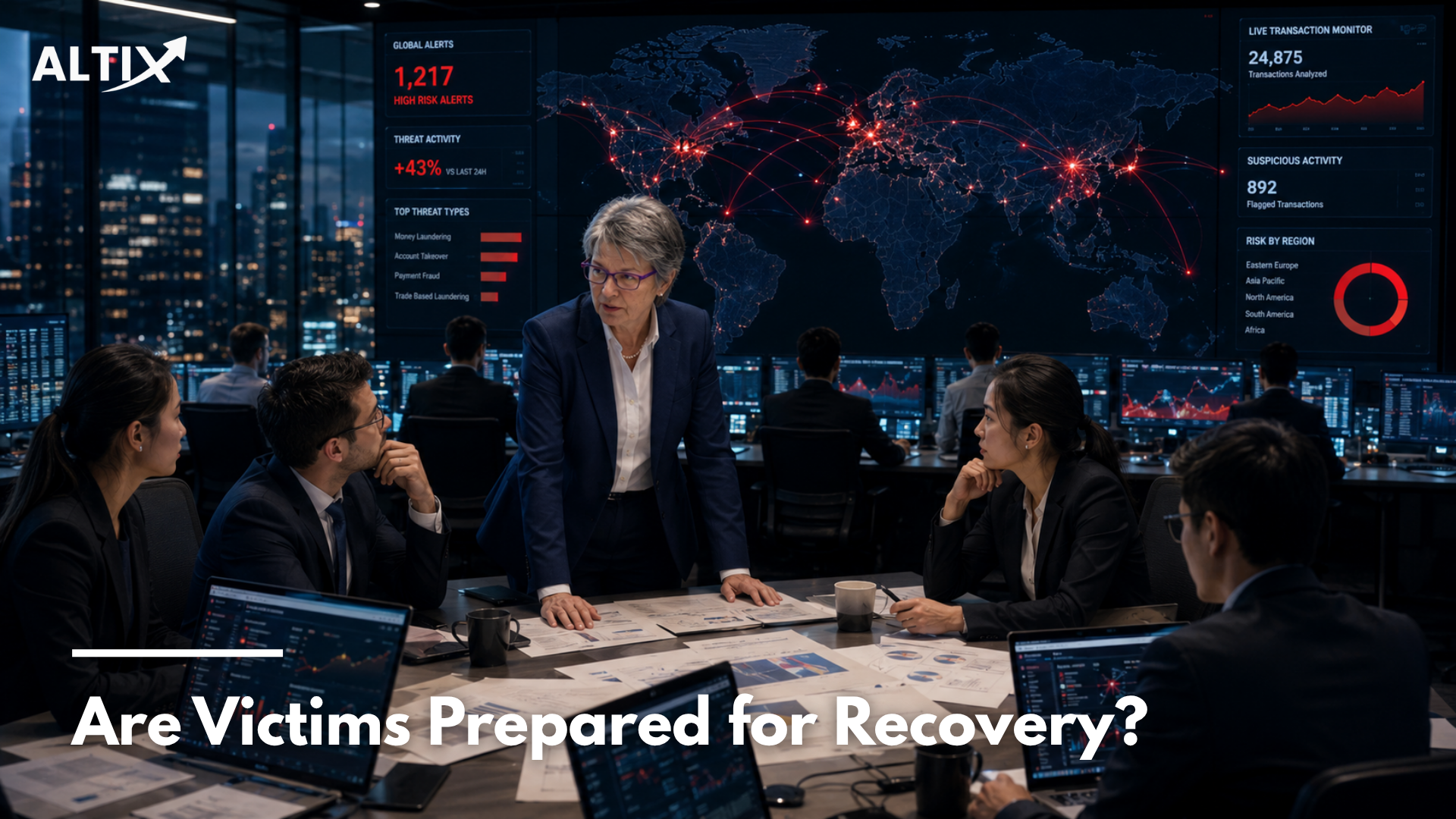
Transaction monitoring.
Behavioral analytics.
AML alerts.
Escalation procedures.
Risk scoring.
Operational reviews.
These systems are designed to identify unusual activity before losses become irreversible.
No institution can prevent every fraud.
But every institution has processes designed to detect risk.
Understanding those processes becomes critically important when recovery is considered.
The Financial Dispute Begins After the Transfer
Many victims believe recovery ends the moment they authorize a payment.
In reality, that is often where the investigation begins.
Recovery increasingly depends on questions such as:
- Were unusual transaction patterns identified?
- Were fraud monitoring systems triggered?
- Did escalation procedures operate as intended?
- What information was available at the time?
- Were opportunities to intervene missed?
These are complex questions.
They require evidence.
Technical understanding.
And an appreciation of how financial institutions make operational decisions under pressure.
Banking Experience Changes the Conversation
Fraud recovery is no longer simply about identifying criminals.
It is about understanding financial systems.
Years spent inside banking provide a perspective that cannot be learned solely through litigation.
Understanding AML frameworks.
Payment operations.
Fraud controls.
Correspondent banking.
Risk governance.
These are often the foundations of sophisticated recovery strategies.

A New Era for Litigation Finance
The litigation finance industry is evolving alongside financial crime.
Increasingly, funded claims involve:
- cross-border fraud
- institutional accountability
- complex financial investigations
- digital evidence
- asset tracing
Recovery is becoming multidisciplinary.
Lawyers alone are no longer enough.
Investigators, banking specialists, forensic experts, and litigation funders increasingly work together to build stronger cases.
That collaboration is reshaping access to justice for victims worldwide.

Looking Forward
The most important lesson from this week's regulatory developments is not that AI is becoming more powerful.
It is that financial institutions are adapting.
Recovery professionals must evolve at the same pace.
The future belongs to organizations that understand both sides of the equation:
How fraud happens.
And how financial systems respond once it does.
Financial crime will continue to evolve.
Technology will continue to advance.
Banks will continue strengthening their defenses.
But victims should not be left behind.
Recovery should never depend solely on luck.
It should depend on evidence, expertise, and understanding how financial institutions operate from the inside.
At ALTIX, we work with claimants, legal professionals, investigators, and funding partners to help transform complex financial disputes into structured recovery opportunities.
If you are facing investment fraud, banking disputes, cross-border financial loss, or require litigation funding support, we'd welcome the opportunity to discuss your case.
Because understanding the banking system is often the first step toward recovering what was lost.
Sources
- European banking supervisors' warning on AI-driven cyber risk and cybersecurity preparedness.
- OECD report, Protecting Consumers from Financial Scams and Frauds (2026).