


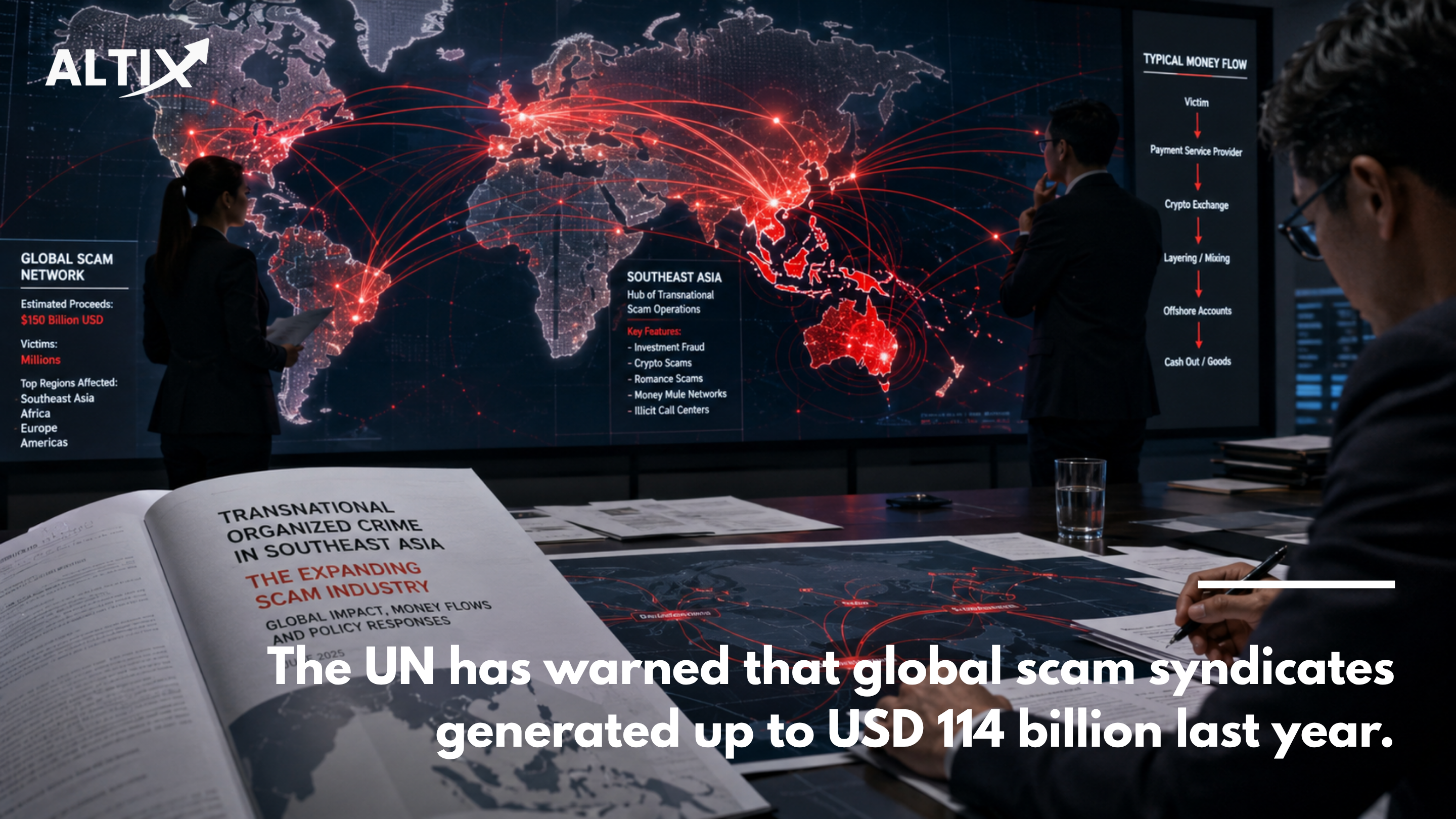
This week, the United Nations Office on Drugs and Crime (UNODC) released one of the most alarming assessments of global financial fraud in recent years.
Its conclusion was simple.
Scams are no longer isolated criminal acts.
They have become an industrial economy.
According to the report, scam operations generated an estimated USD 88.3 to USD 114.1 billion across the Asia-Pacific region in 2025 alone, with criminal networks rapidly expanding into Africa, Latin America and other regions through what investigators describe as "jurisdiction shopping." Reuters and the Associated Press reported that these organisations increasingly operate like multinational corporations, complete with departments dedicated to money laundering, recruitment, technology, customer targeting and financial logistics.
For anyone working in banking, financial crime, or recovery, this should be a defining moment.
Because we are no longer fighting individual scammers.
We are confronting an industry.
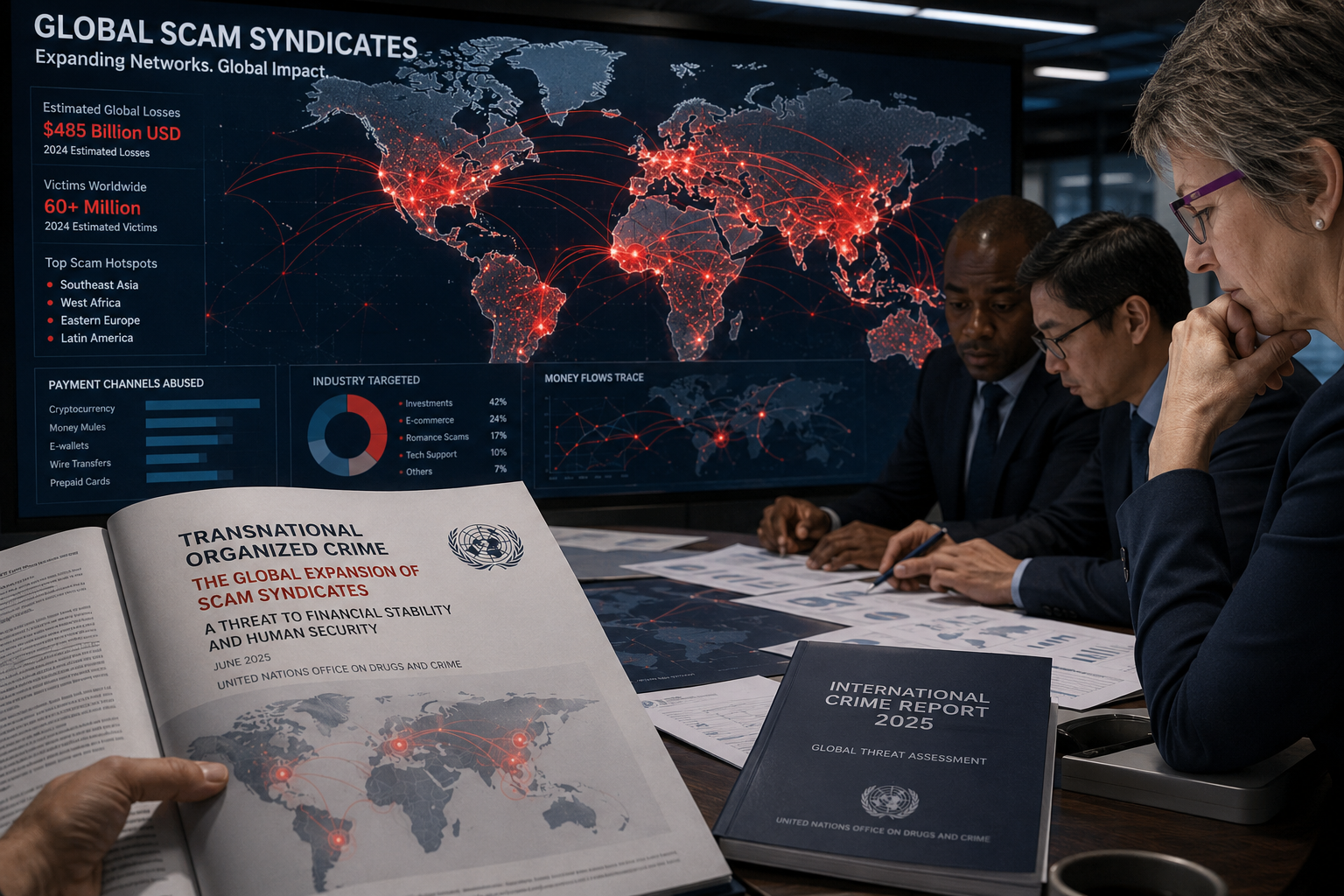
A Scam Is No Longer Just a Scam
The modern scam economy resembles a legitimate multinational business.
Dedicated teams develop phishing campaigns.
Others specialise in laundering funds.
Some focus on AI-generated content.
Others recruit victims or traffic workers into scam compounds.
Every function has become specialised.
Every process has become scalable.
That explains why scams today move faster, look more convincing, and reach victims across multiple jurisdictions within hours.

Why This Matters to Banks
As a former banking executive, one reality has always stood out to me.
No matter how sophisticated a scam becomes, money still has to move through the financial system.
Every payment creates a record.
Every transfer leaves a trail.
Every transaction becomes potential evidence.
Banks cannot prevent every fraud.
Nor should every loss automatically imply institutional liability.
But financial institutions increasingly play a critical role in identifying suspicious activity, preserving evidence, supporting investigations and strengthening recovery efforts.
That is where banking expertise becomes invaluable.

The Financial Dispute Begins After the Fraud
Many victims believe that once money leaves their account, the story is over.
In reality, that is often where the most important work begins.
Recovery increasingly depends on understanding:
- where the funds travelled
- which institutions handled them
- whether suspicious activity was identified
- whether AML controls were activated
- how quickly intervention occurred
- what evidence remains available
These questions transform criminal events into financial disputes built on evidence rather than emotion.

The Role of Litigation Finance
Large-scale fraud recovery is rarely simple.
Cross-border investigations require specialist legal teams, forensic accountants, financial investigators and often significant funding.
That is why litigation finance continues to play a growing role in access to justice.
It enables strong claims to proceed where cost would otherwise prevent victims from pursuing recovery.
Combined with financial investigation and AML expertise, it creates a more structured path toward accountability.

What Most Victims Never Realise
Victims often spend months searching for the criminals.
Experienced investigators first follow the money.
Financial recovery rarely begins with identifying the person behind the keyboard.
It begins with understanding the financial infrastructure that enabled the movement of funds.
That distinction can fundamentally change how recovery strategies are developed.
Looking Ahead
The UN report should serve as a wake-up call.
Fraud is no longer a collection of isolated scams.
It is a global economic system supported by sophisticated technology, cross-border money laundering and organised criminal networks.
The response must be equally sophisticated.
Banks.
Investigators.
Law firms.
Regulators.
Litigation funders.
Each has a role to play in building better recovery pathways.
The future of fraud recovery will not be defined solely by arrests.
It will be defined by how effectively we trace assets, preserve evidence and create meaningful access to justice.
At ALTIX, we believe victims deserve more than being told their money is gone.
Our experience in banking, AML, financial investigations and litigation finance allows us to help claimants, legal professionals and funding partners navigate complex financial disputes with a structured recovery approach.
If you are dealing with investment fraud, banking disputes or cross-border financial losses, we welcome the opportunity to discuss your recovery options.
Because the fight against organised financial crime should not end with reporting the fraud.
It should continue until every viable recovery pathway has been explored.
Sources
United Nations Office on Drugs and Crime (UNODC), reported by Reuters (21 July 2026): Crime gangs generated an estimated USD 88.3 to USD 114.1 billion through scam operations across Asia-Pacific in 2025.
Associated Press, "International criminal groups use technology to expand in and beyond Asia, UN report says" (21 July 2026).